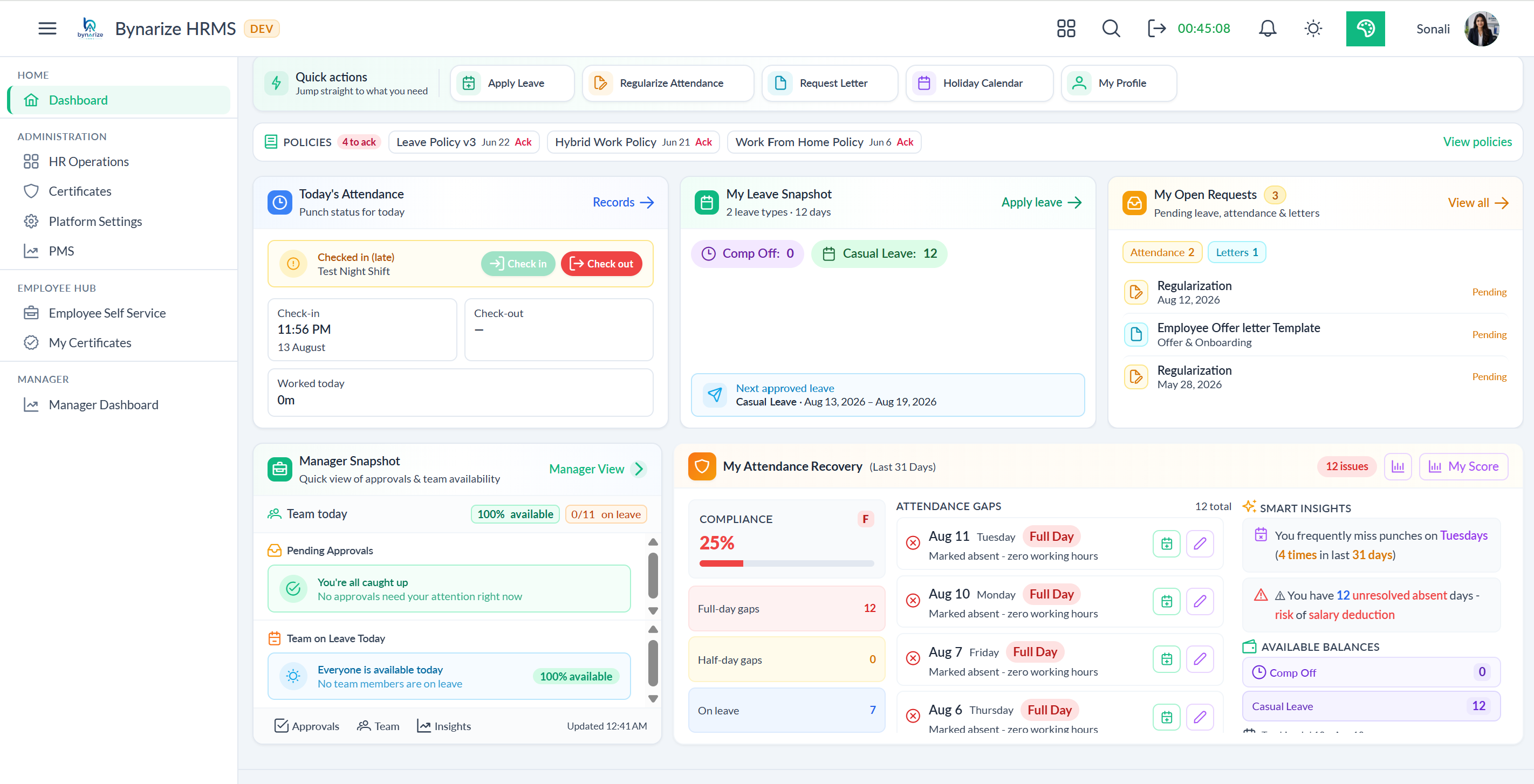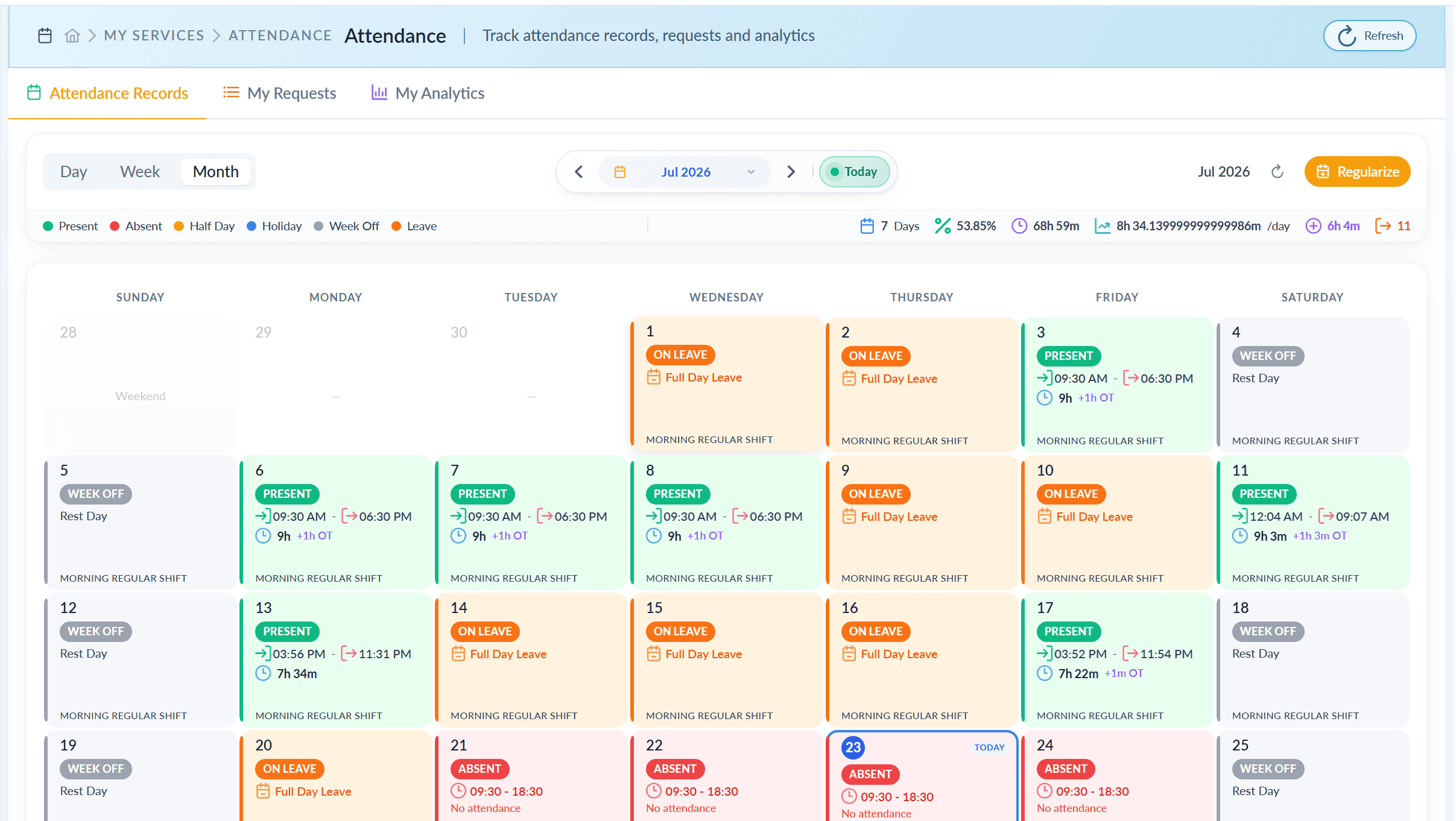
The company grew from 80 to 220 in 14 months. The HR team is still 3 people. Leave approvals are late. Onboarding feels chaotic. Payroll inputs slip every cycle. The CHRO�s instinct is �hire 2 more in HR.� The CFO pushes back. Both are partially right � but neither solves the actual problem.
The wrong default: �We just need more HR people�
Most companies, when HR starts breaking, hire more HR. It works for a quarter. Then the same problems return at a higher headcount. The reason is simple: the bottleneck was never the people � it was the volume of repetitive, low-judgment work that should never have been on humans in the first place.
What the HR team is actually doing all day
- Approving leaves that fit policy and need no human decision.
- Chasing managers for attendance regularisation.
- Building the same onboarding checklist for every joiner.
- Reconciling attendance to payroll across 3 spreadsheets.
- Answering �what is my balance?� on Slack, every day.
These five together typically eat 60�70% of HR ops time. None of them require a human.
What it costs to keep doing it manually
HR burnout & attrition
Your best HR people leave because the job became data entry.
Decision delays
Operational decisions wait on HR plumbing instead of HR judgment.
Compounding errors
Manual work at scale = guaranteed payroll, leave and audit mistakes.
Hidden HR cost
Each new HR hire costs more than 12�18 months of HRMS automation.
Why this happens � it�s not a people problem
It happens because the company added employees but did not add structure. No automation. No standard workflows. No self-service. So every new employee adds linear load to a fixed HR team. The output curve flattens � then breaks.
How to actually scale HR without hiring more
Automate the routine 70%
Leave, attendance, regularisation, payroll inputs � rules, not approvals.
Real employee self-service
Balances, payslips, requests, documents � employees don�t need to ask HR.
Configurable workflows
Approval matrices, escalations and SLAs � enforced by the system, not memory.
Dashboards over reports
Leadership stops asking HR for data � they see it live.
See Bynarize�s AI & automation suite and workflow engine in action. For more, read why HR approvals get delayed and HR challenges at 50�200 employees.
If you�re a Founder, HR Head or Operations Leader, scaling HR is not about hiring more people � it�s about building the right systems that grow with your company.
Is your HR system ready to scale with your business?
Automate the repetitive 70% � free your HR team for the work that actually needs them.