Headcount has crossed 120. The HR team is the same 2 people who joined when you were 40. Approvals queue for days. Three different sheets show three different headcounts. The CEO asks for a simple report and HR spends two days building it. The tools haven�t scaled with the company.
Why HR breaks specifically at 50�200 employees
This range is the most painful in any company�s HR journey. You are too big for informal coordination, too small for a 10-person HR team, and usually still running on tools chosen when you were 30.
The five challenges that show up first
- Approval delays: Leave, reimbursements, transfers � every request waits in someone�s inbox.
- Data inconsistency: Same employee�s details differ in HRMS, payroll tool and asset sheet.
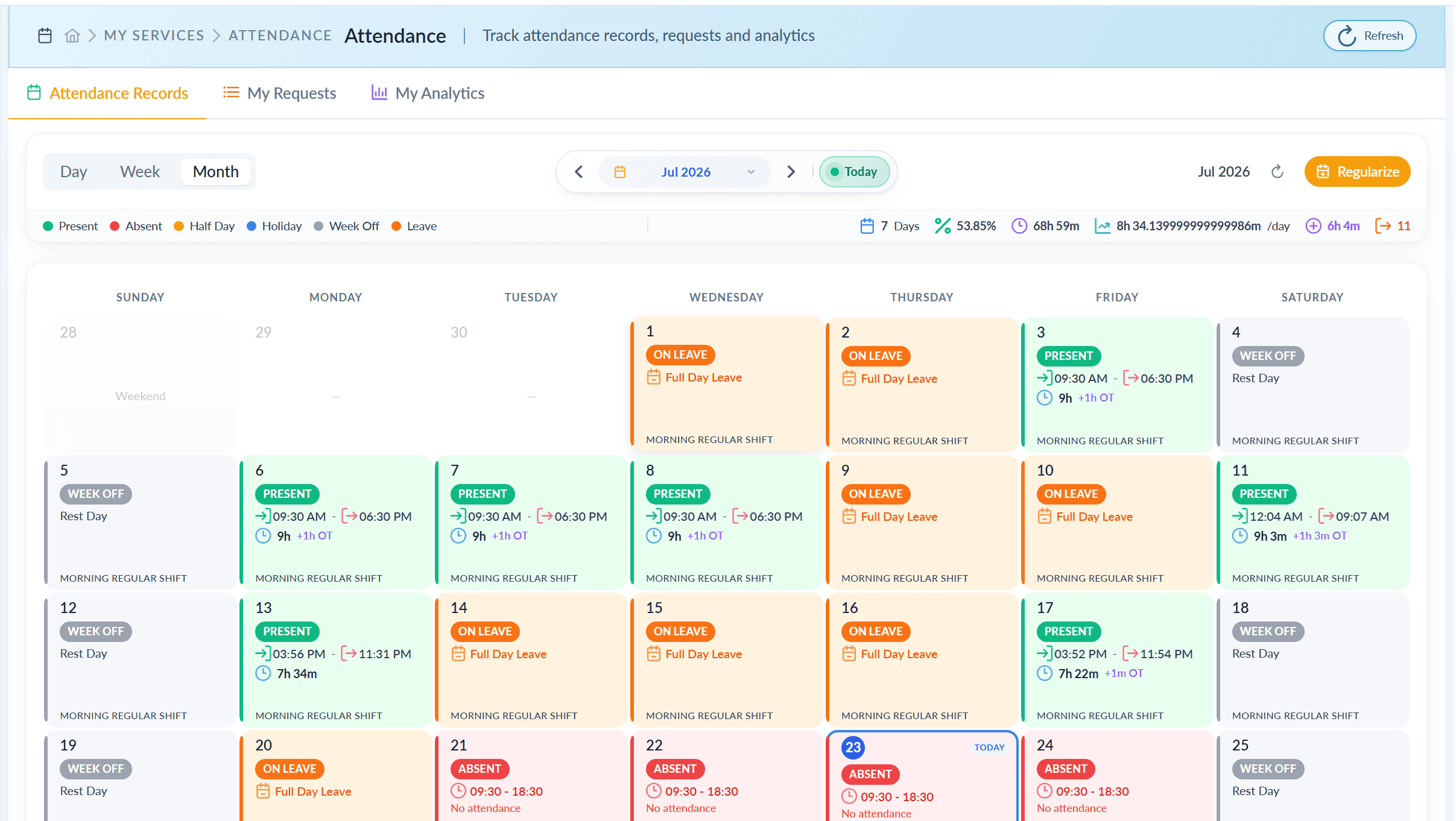
- Manual processes: Onboarding, regularisation, exits � still done over email checklists.
- Policy drift: Different managers apply the same policy differently because no system enforces it.
- No real visibility: Leadership has to ask HR for every number; nothing is dashboard-ready.
What this actually costs the business
3�7 day approval cycles
Operational decisions stuck waiting on HR plumbing.
Employee dissatisfaction
People talk � �HR here is slow� becomes a brand on Glassdoor.
Management blind spots
Leaders make decisions on stale data � or wait days for fresh data.
HR team burnout
The same 2�3 people firefight while strategic work piles up.
Why it happens � and it�s not your HR team
Almost every mid-size company hits this wall for the same reason: the systems were chosen when the company was 25�40 people. They were never designed for 150 employees, multiple locations, multi-level approvals and audit-ready records. The team is doing heroic work to compensate for tools that have run out of road.
The fix: a structured HRMS built for scale
Centralised employee data
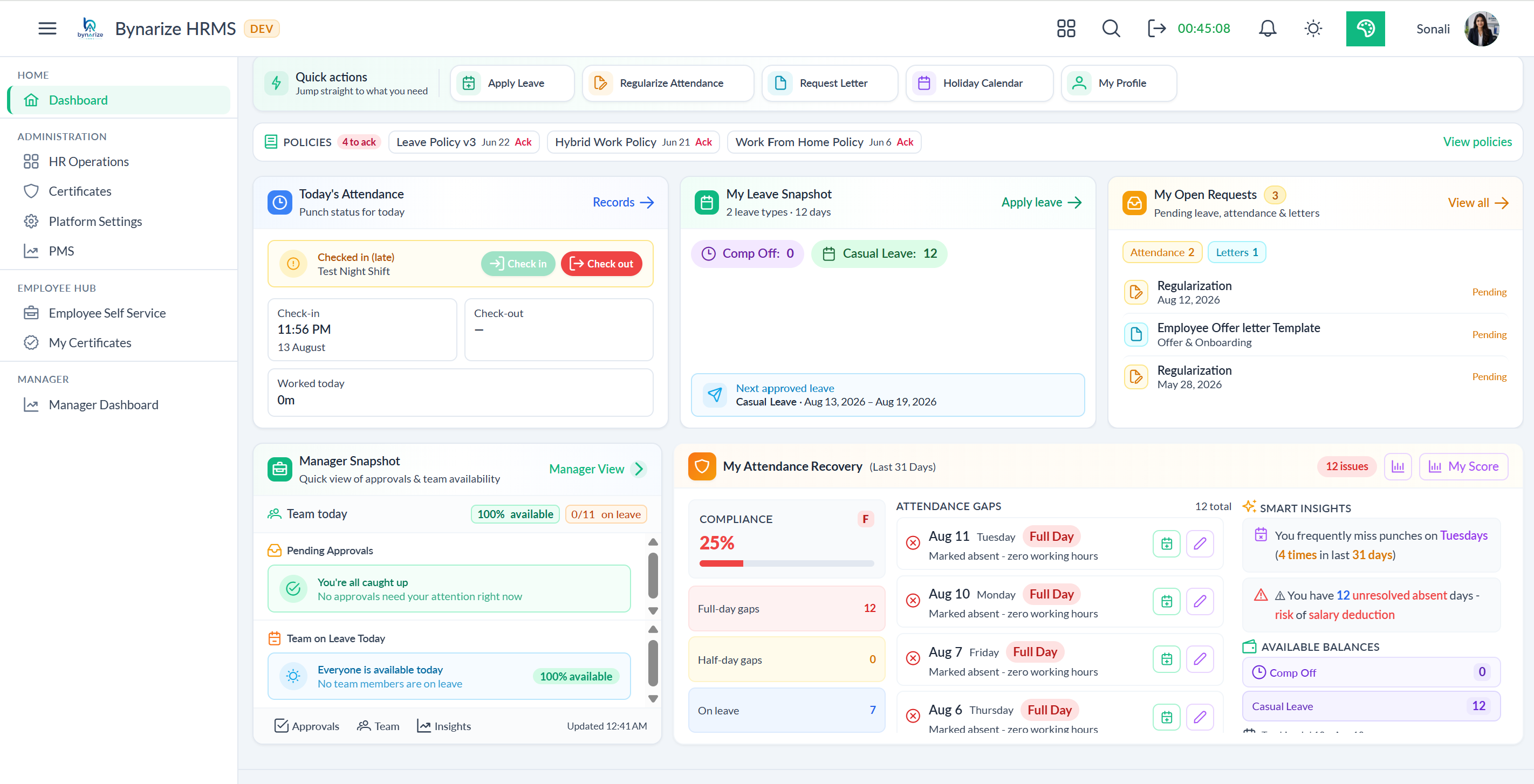
One source of truth across HR, payroll, attendance, assets and access.
Configurable workflows
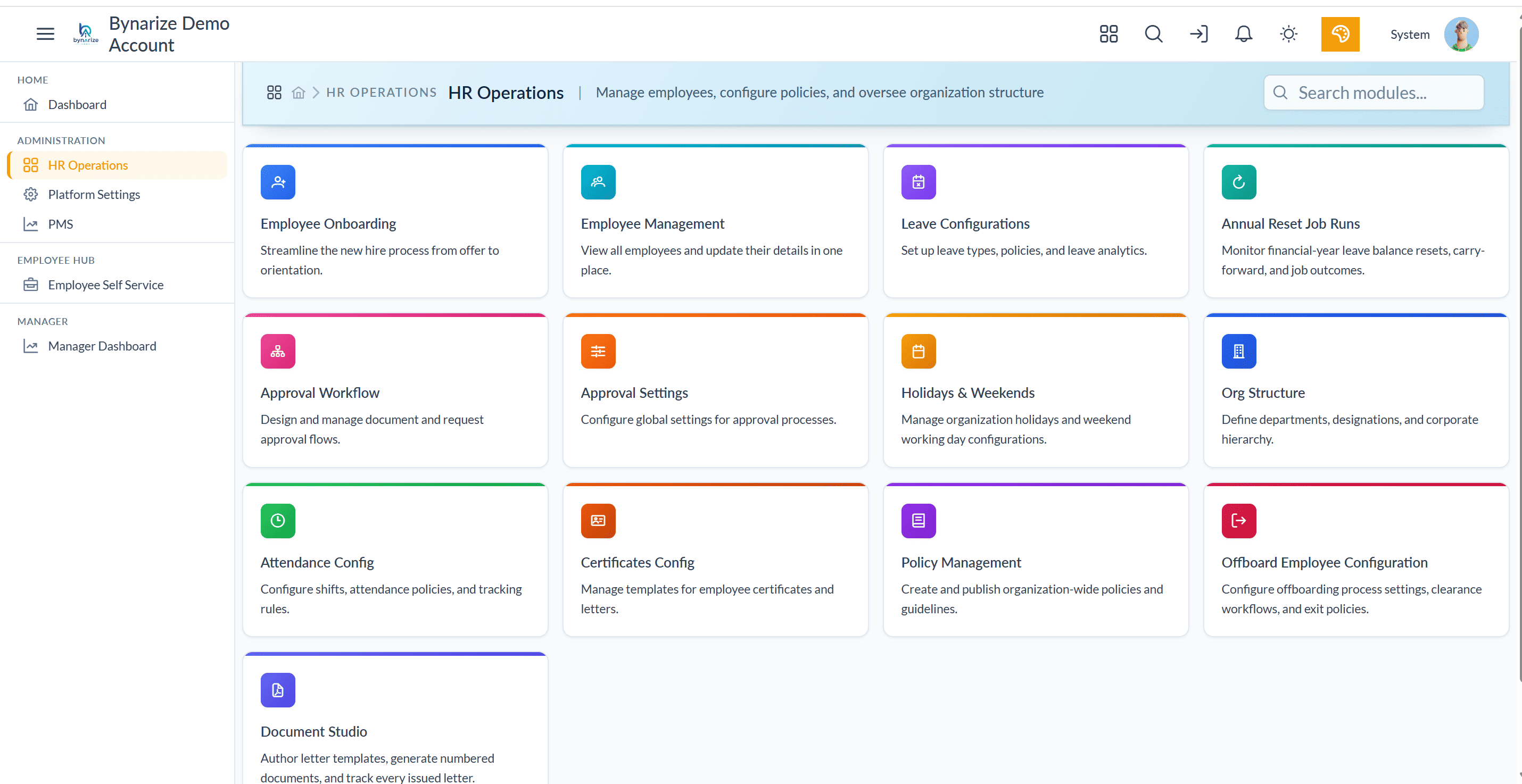
Approval matrices that match your real org, not a template.
Real-time dashboards
CEO/CHRO get answers without asking HR for a report.
Built-in compliance
POSH, leave laws, PF/ESI, S&E � enforced, not remembered.
Explore Bynarize�s workflow engine and complete HRMS platform. For more on this stage, read why HR approvals get delayed in mid-size companies and why multi-location companies fail at workforce tracking.
If you are an HR Head or Operations Leader, the 50�200 stage is not about adding more HR people � it is about giving the people you have a system that scales with the company instead of fighting them every day.
Is your HR system ready to scale with your business?
Move from firefighting to structured operations � without doubling the HR team.