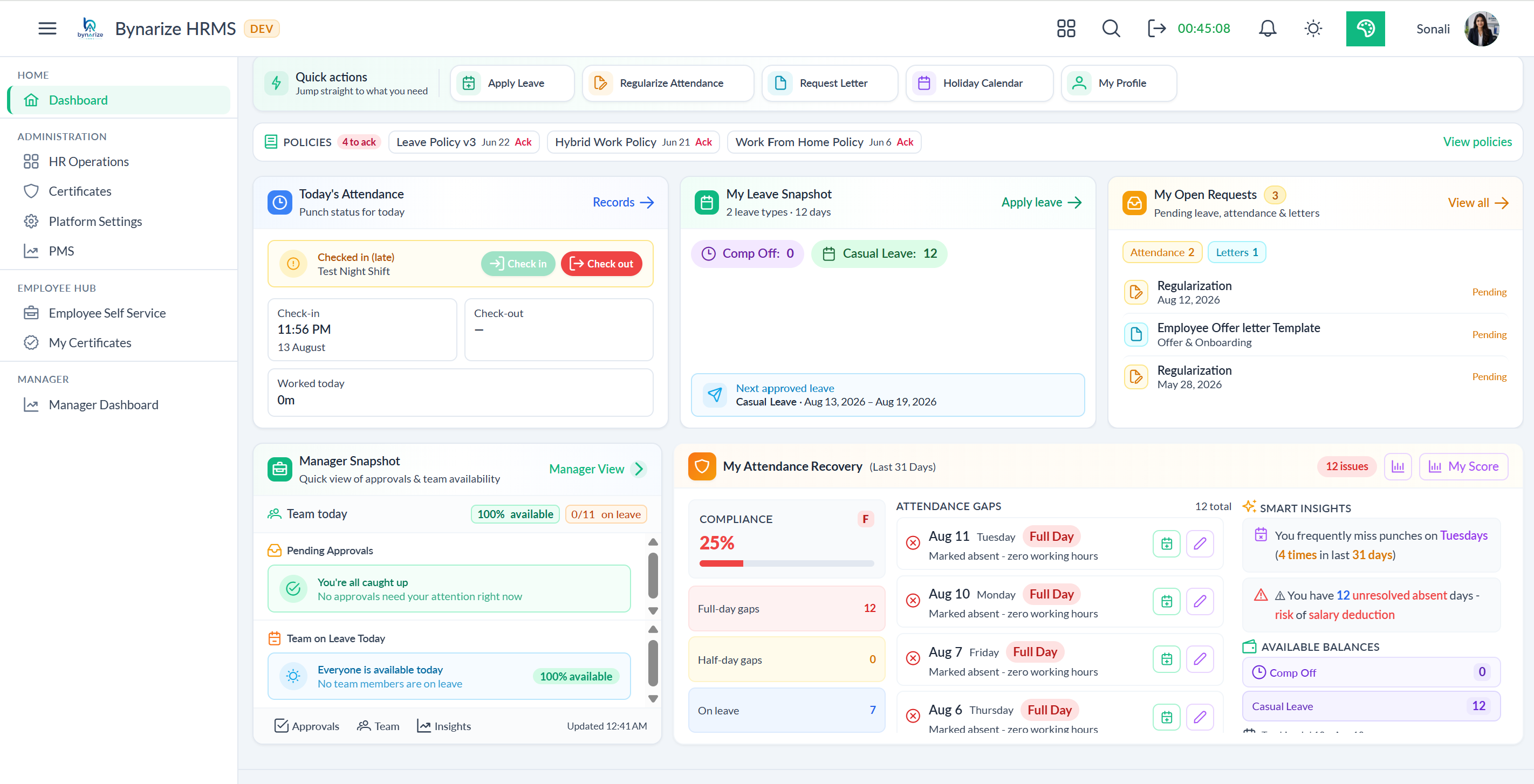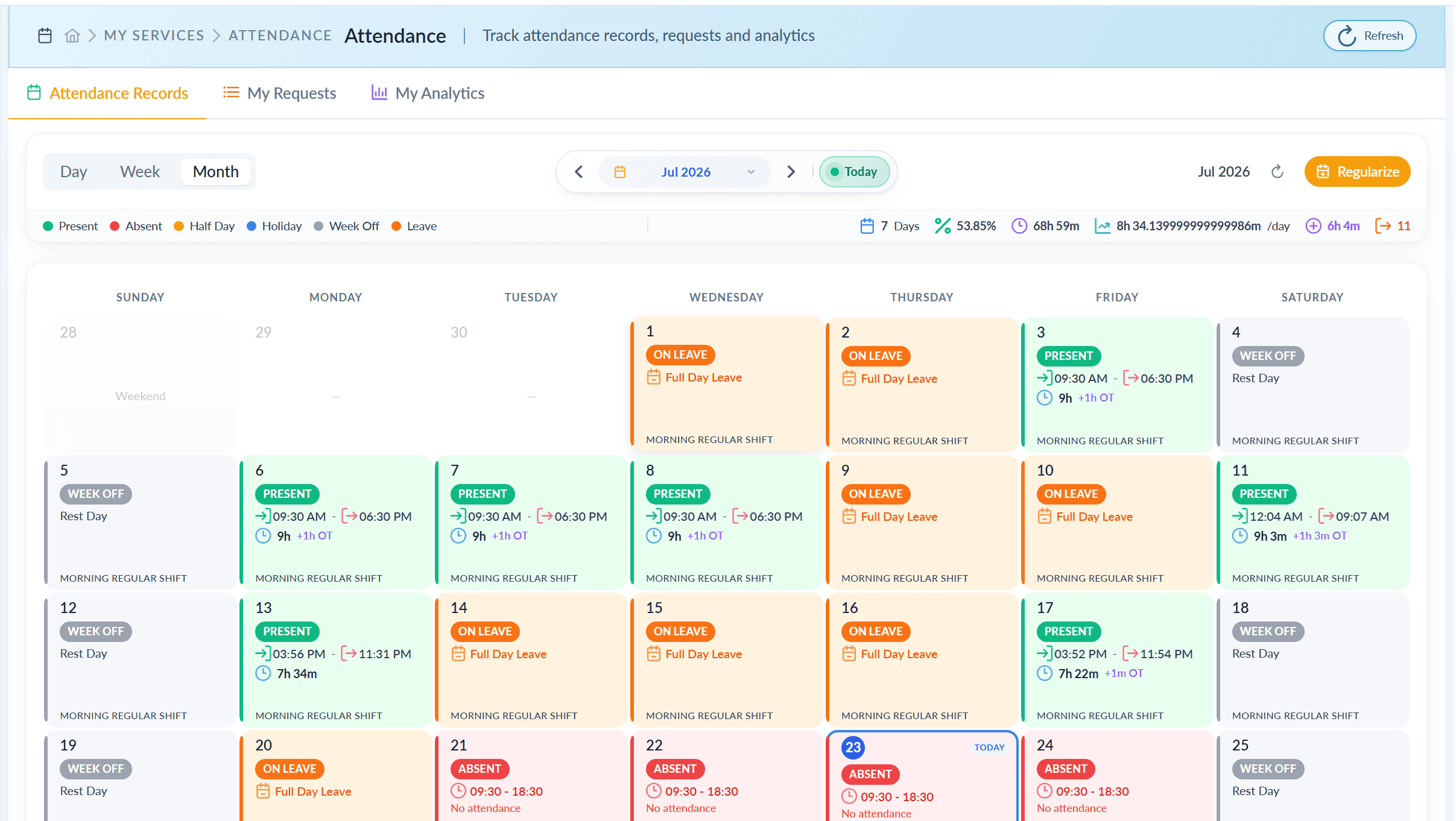
A retail chain with 12 stores across 4 cities. Each store admin uses a different attendance method - biometric in two, manual register in five, a mobile app in the rest. Headcount reports take a full day to compile. When the COO asks "how many people are clocked in right now?", the only honest answer is: "I'll get back to you tomorrow."
Why workforce tracking breaks across locations
- Tool fragmentation: Each branch picks what suits them locally.
- Inconsistent policies: Late-mark, OT and shift rules differ branch to branch.
- No central master: Employees in transit between branches show up twice (or nowhere).
- Manual consolidation: Reports stitched together in Excel - accurate as of yesterday.
- Branch-level shadow data: Approvals, regularisations and leaves stay local until month-end.
What this costs the business
No real-time visibility
Leadership cannot answer basic workforce questions today.
Branch-wise inefficiency
Overstaffing in one branch, understaffing in another - invisible until quarter-end.
Compliance gaps
Statutory variations per state are missed because rules are local, not centralised.
Duplicate effort
HR generalist at every location doing the same reconciliation work.
What "centralised" actually means
One employee master
Everyone, everywhere - one record, one ID, one history.
Location-aware policies
State-specific statutory + branch-specific shifts handled in one engine.
Real-time roll-up
Live headcount, attendance and leave dashboards by branch and region.
Hardware-flexible
Mix biometric, mobile and RFID - central rules apply uniformly.
See how centralised attendance across locations and a unified HRMS simplify operations. For related reads, see how attendance fraud creeps in at scale and payroll errors in India.
Still managing HR operations across multiple tools?
Centralise the data - keep your branches, your shifts and your devices.