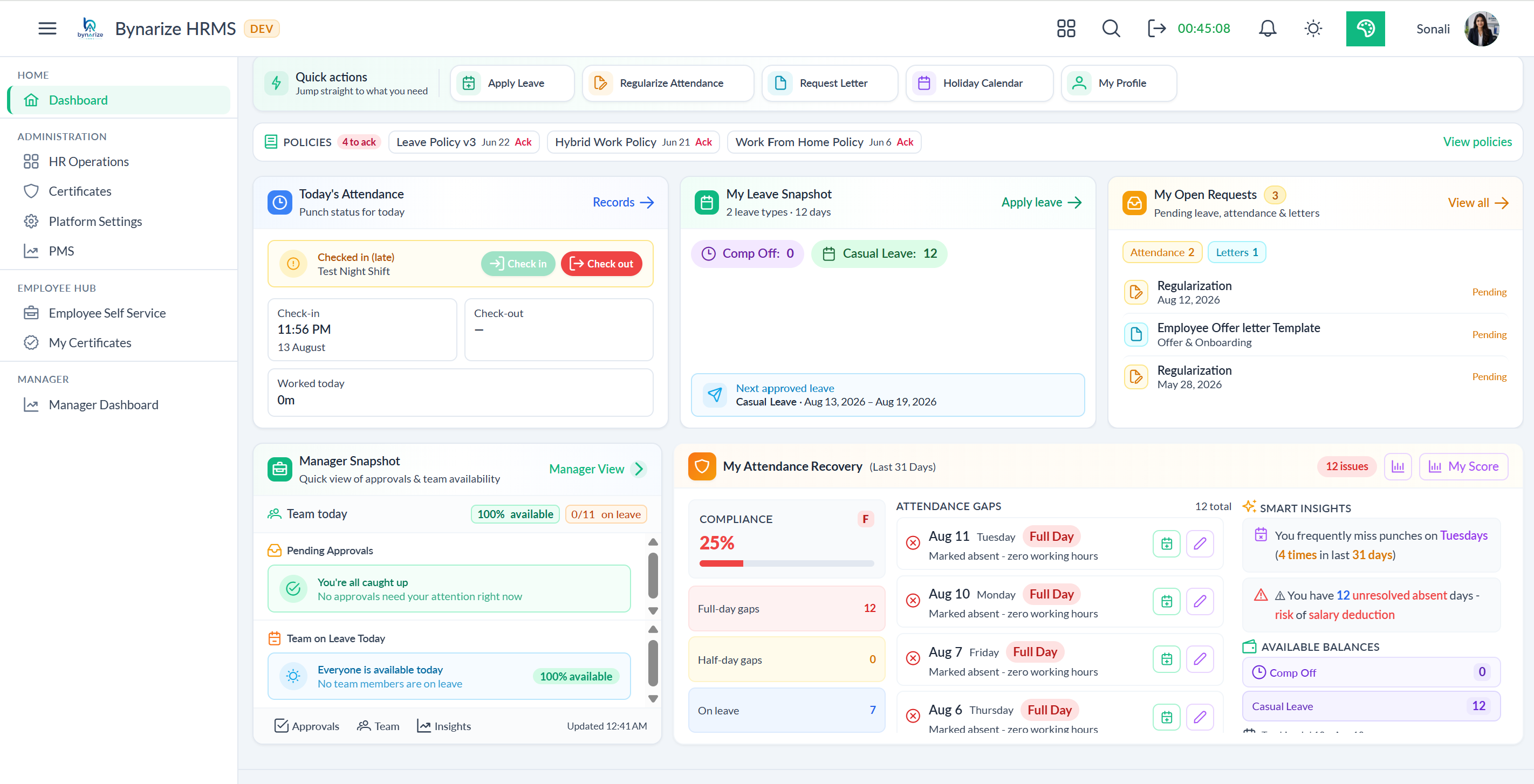
A 240-person company. HR uses one platform. IT uses a separate asset tool. The reception runs a visitor app. Each is "best-in-class" for its job. But when an employee resigns, three teams have to be told individually - and one of them always forgets. Six months later, ex-employees still hold devices and active access cards.
The separate-tools approach
Specialist tools win on depth. HR teams pick the best leave product, IT picks the best asset tracker, security picks the best visitor system. Each is excellent in isolation.
- Strengths: Deep features, faster vendor innovation in their niche, flexible to swap.
- Weaknesses: Fragmented data, integration overhead, inconsistent UX, multi-vendor coordination.
The all-in-one approach
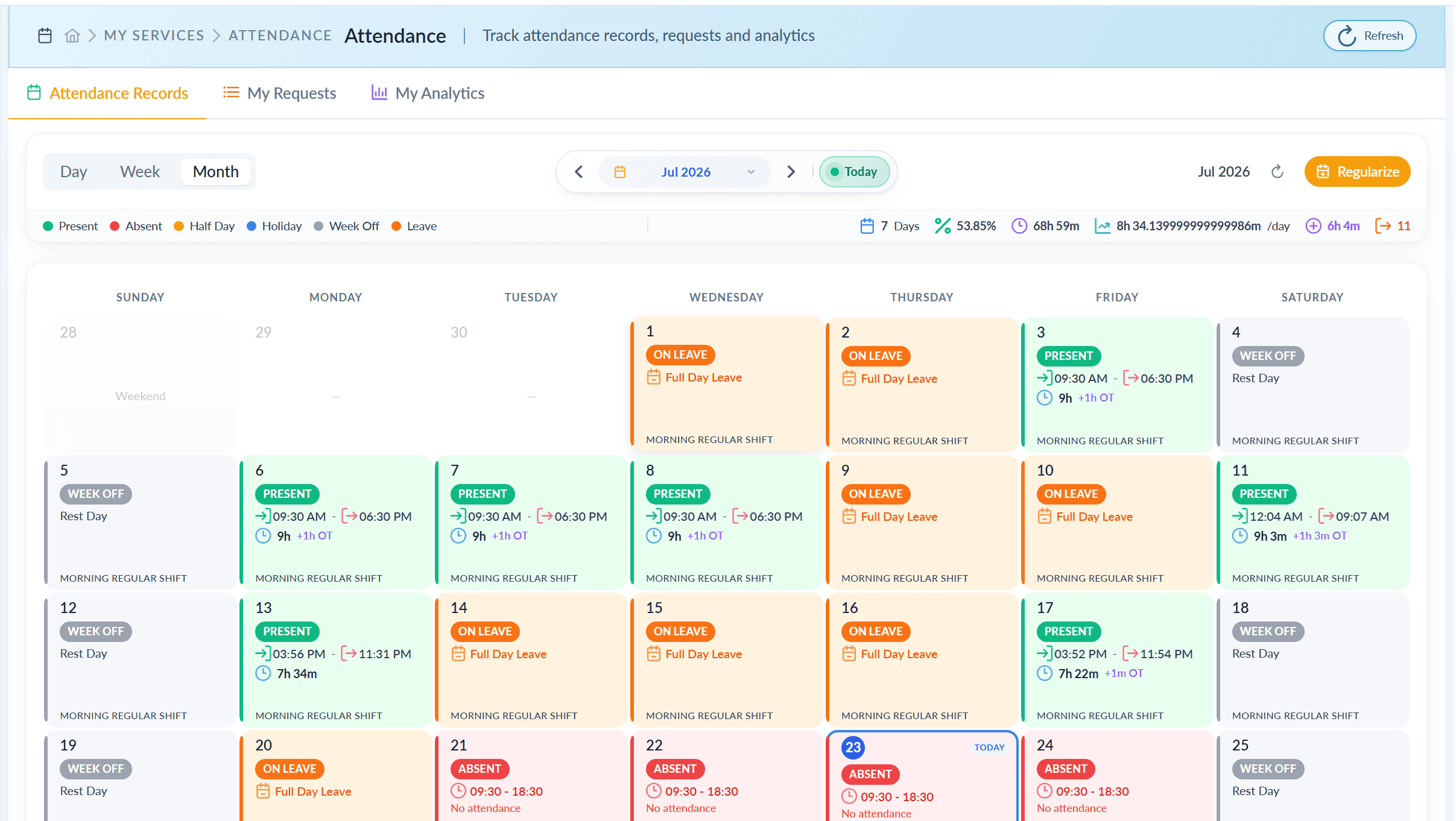
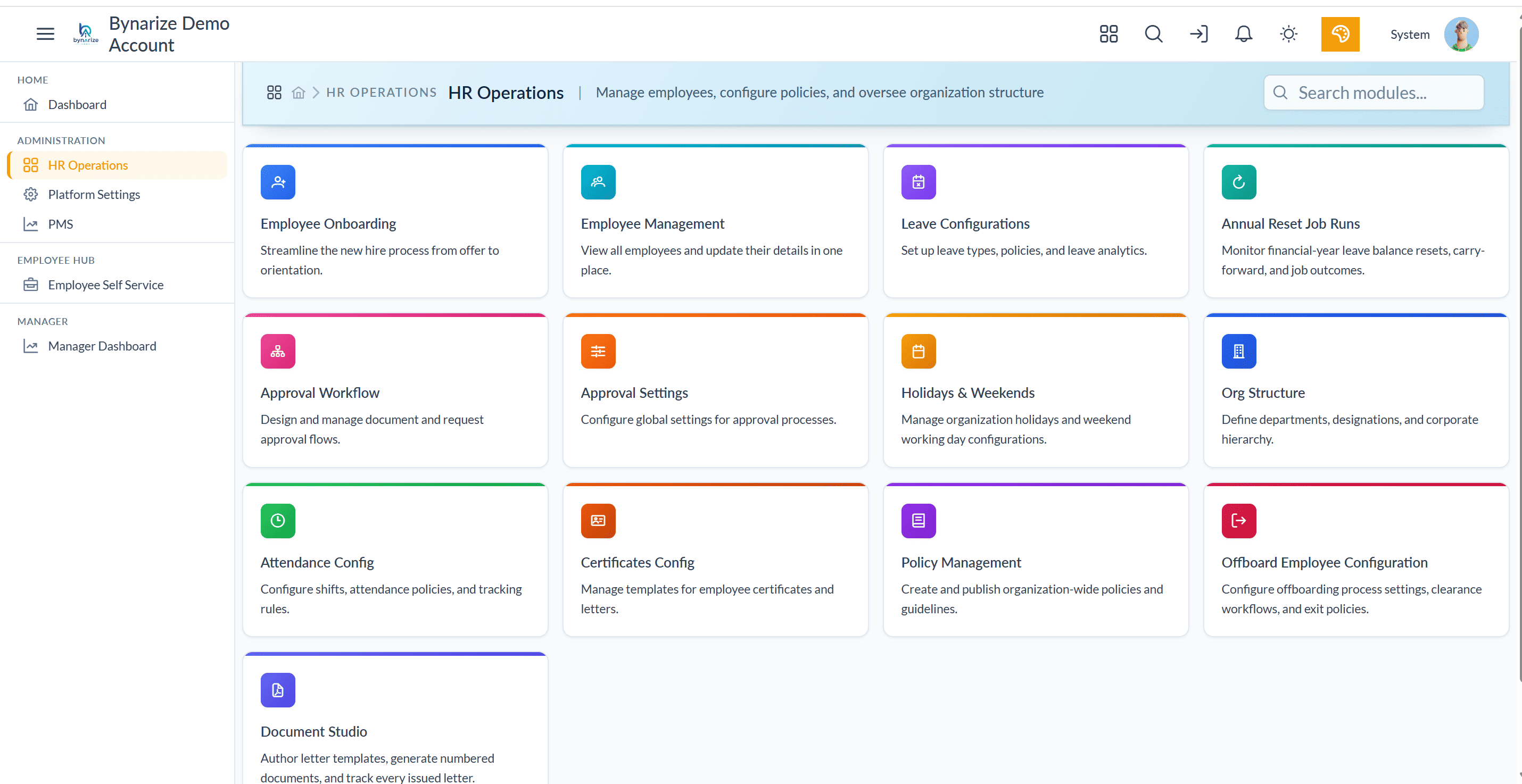
One platform owns the employee record. HR, attendance, leave, payroll, asset assignment and visitor entries all sit on the same spine.
- Strengths: Unified data, automatic cross-module workflows, single UX, one vendor.
- Weaknesses: Some niche modules (advanced LMS, deep ATS) may be lighter than dedicated specialists.
Separate tools vs all-in-one HRMS
| Dimension | Separate Specialist Tools | All-in-One HRMS |
|---|---|---|
| Operational efficiency | Manual handoffs between systems | One workflow triggers all updates |
| Total cost | Multiple subscriptions + integration spend | Single platform, lower TCO at scale |
| Data visibility | Siloed, lagged dashboards | Unified, real-time across modules |
| Scalability | Each new module = new vendor | Add modules without re-architecting |
| Onboarding & exit | Coordinated across teams & tools | One trigger, end-to-end automation |
| Niche depth | Best-in-class per module | Strong, occasionally lighter on edge cases |
Stay with separate tools when: You have under ~80 employees, your processes are simple, and one tool genuinely solves a critical niche need. Move to all-in-one when: HR spends real time reconciling between systems, leadership cannot get cross-module insights, or onboarding/exit consistently leaks across teams. The break-point typically arrives between 80–250 employees.
See how Bynarize delivers a true all-in-one HRMS - combining HR, attendance, payroll, IT asset management and visitor management on one record. Related decision reads: HRMS vs multiple tools and why HR + ITAM + VMS should not be separate.
Still managing HR across multiple tools or spreadsheets?
See what an all-in-one HR + IT + visitor platform looks like in 30 minutes.