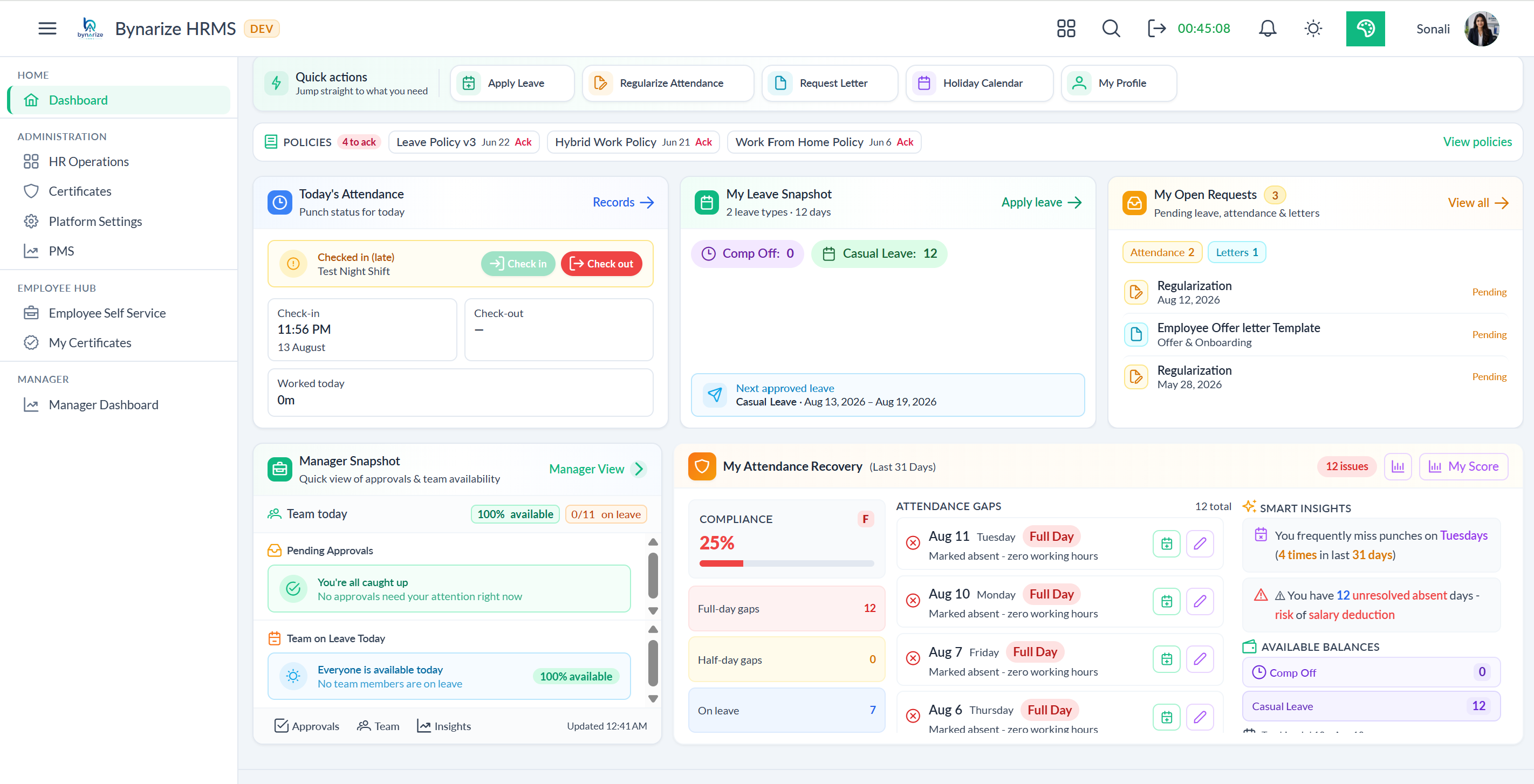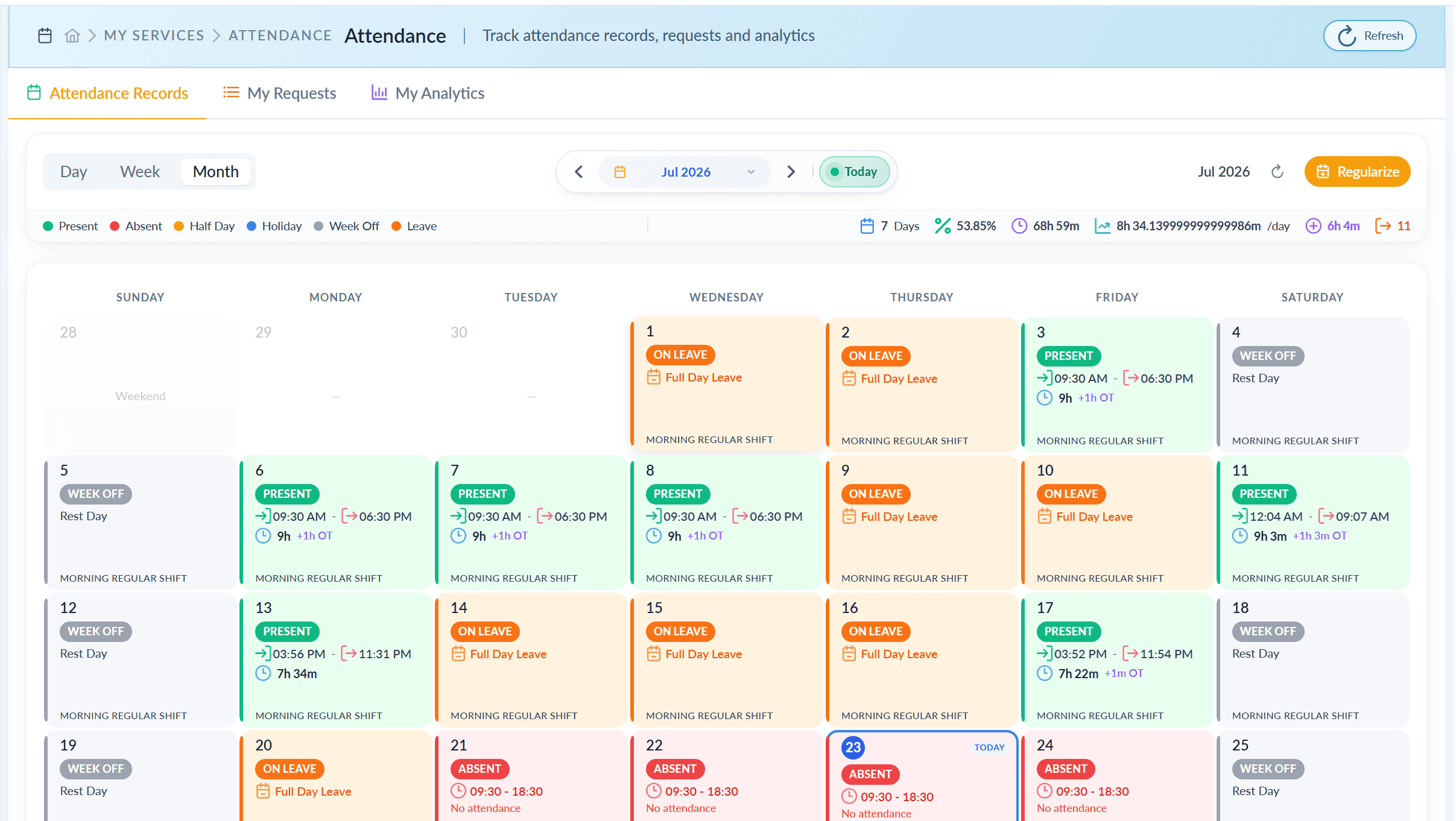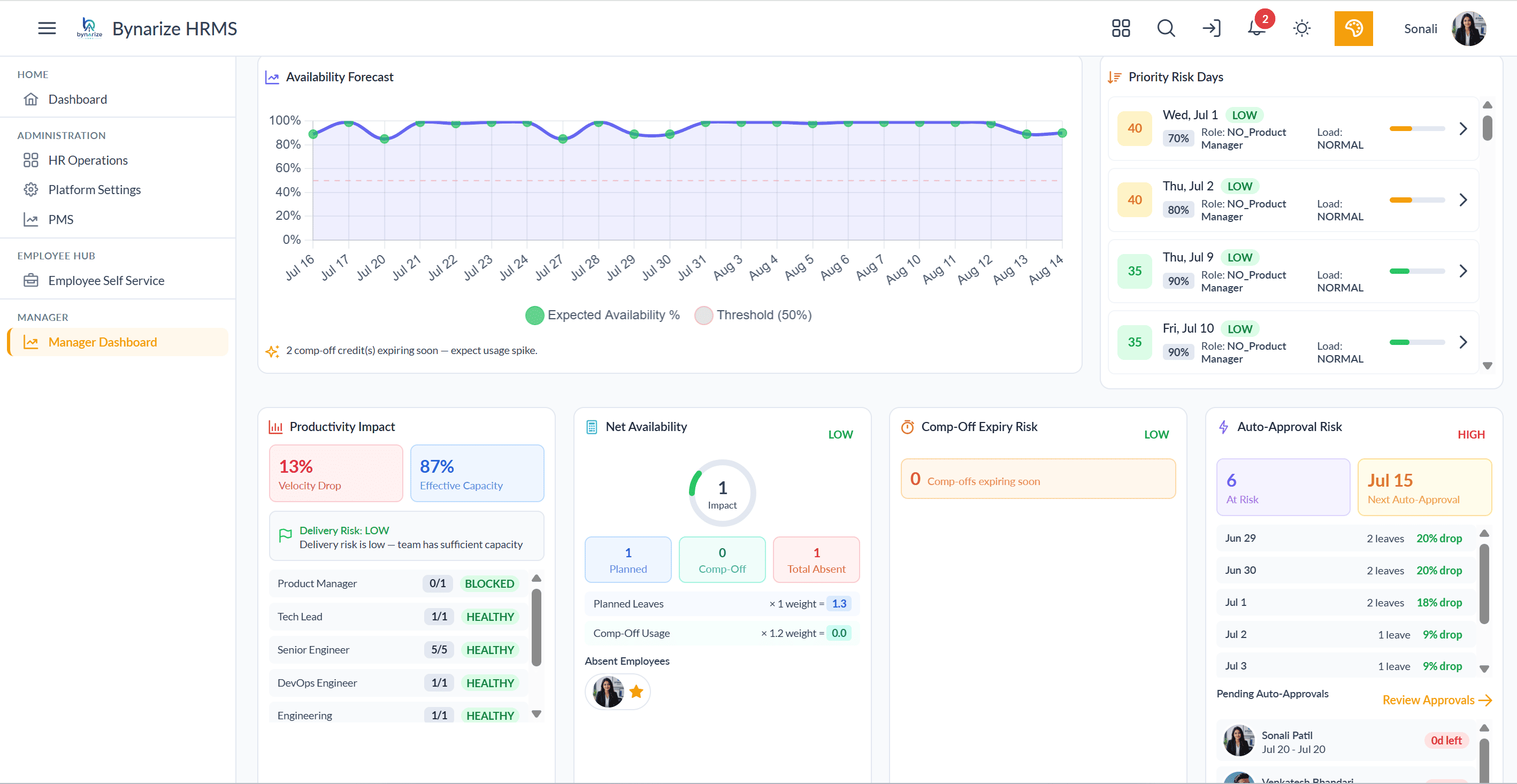
A 350-employee company runs: a biometric attendance vendor, an outsourced payroll provider, an asset tracking SaaS, a visitor management kiosk, and a homegrown leave portal. Each works in isolation. Every month, a junior analyst spends three full days reconciling them so payroll can run. Total subscription cost: ₹14,000/month. Total real cost: a person.
The problems with multi-tool HR stacks
- Data silos: Employee master exists in 4 places. Each one slightly out of date.
- Integration gaps: APIs cover the happy path. Edge cases (transfers, back-dated exits, reversals) fall through.
- Manual syncing: Someone exports CSV from one tool, transforms it, imports into another. Every cycle.
- Reporting inconsistencies: Headcount in HR ≠ headcount in payroll ≠ headcount in assets.
- Multiple logins, multiple UIs: Employees and managers learn 4 interfaces - and use none well.
- Security sprawl: Access reviews, off-boarding and audit trails repeated across vendors.
The hidden costs nobody priced in
Stacked subscriptions
4 vendors × per-employee pricing usually exceeds one unified platform.
Reconciliation time
2–4 person-days per cycle quietly burned on stitching data together.
Error rework
Mismatches surface in payroll and audits - at the worst possible moment.
Vendor coordination
4 SLAs, 4 support tickets, 4 invoices, 4 yearly renewals.
Multiple tools vs unified HRMS
| Capability | 3–5 Separate Tools | Unified HRMS |
|---|---|---|
| Data consistency | Drifts across systems | Single source of truth |
| Total cost | Stacked subscriptions + reconciliation labour | Lower TCO at scale |
| Visibility | Per-tool dashboards, no rollup | Cross-module insights out of the box |
| Ease of use | 4 UIs, 4 logins | One UI, one login |
| Compliance & audit | Trails scattered across vendors | Unified, searchable audit log |
| Time-to-change | Coordinate 4 roadmaps | Configure once, applies everywhere |
Best-of-breed wins when the modules are loosely related. HR data is the opposite - attendance, leave, payroll and assets share the same master and the same events. That is exactly where a unified platform pays off.
The better approach
Consolidation does not have to be all-or-nothing. Start with the modules that share the most data - HR + attendance + payroll - and grow from there. See how Bynarize unifies the entire HR operating stack, including IT asset and visitor management natively. Related reads: all-in-one vs separate tools deep dive and HRMS vs Excel.
Still managing HR across multiple tools or spreadsheets?
One platform replaces four - without losing the depth you rely on.