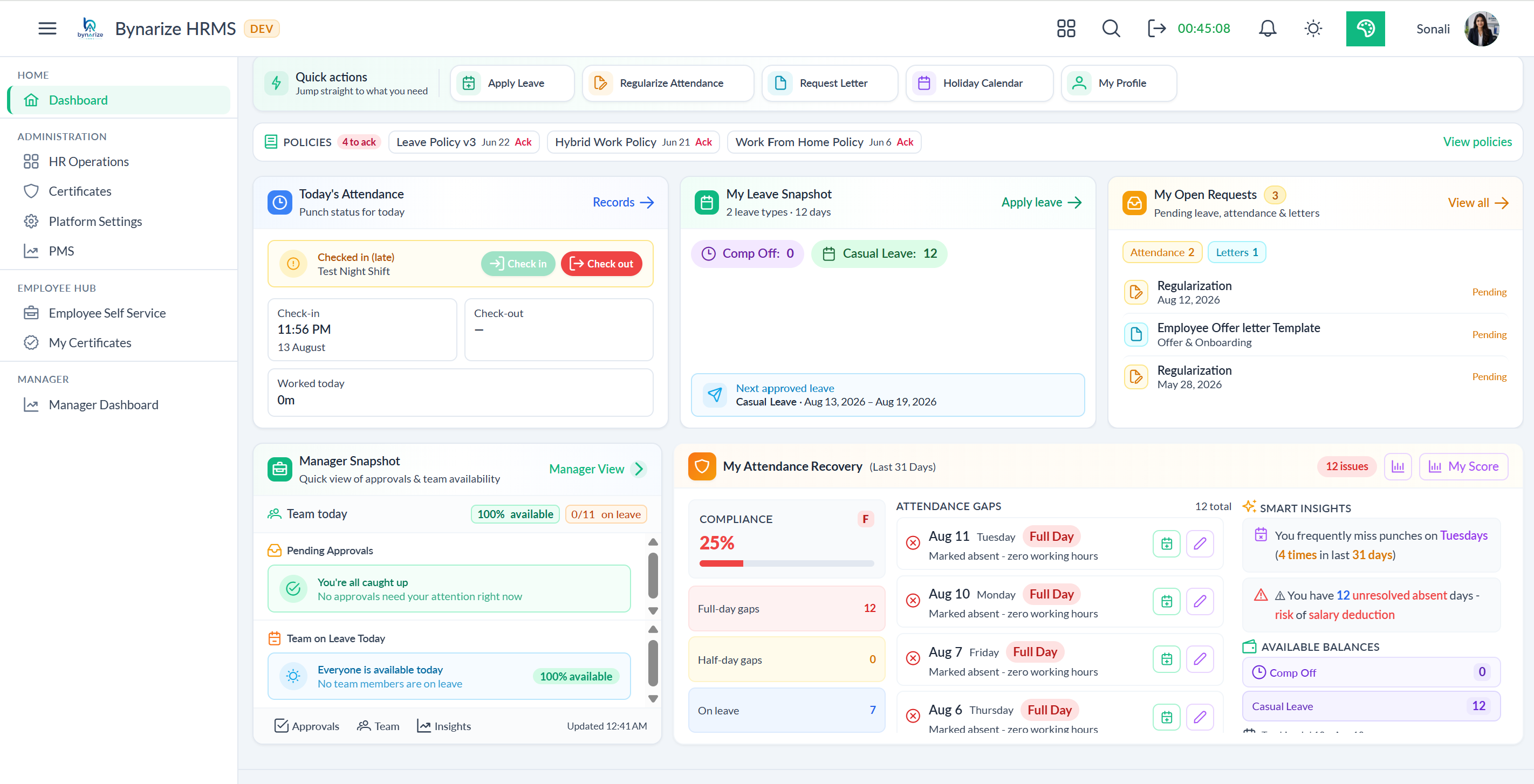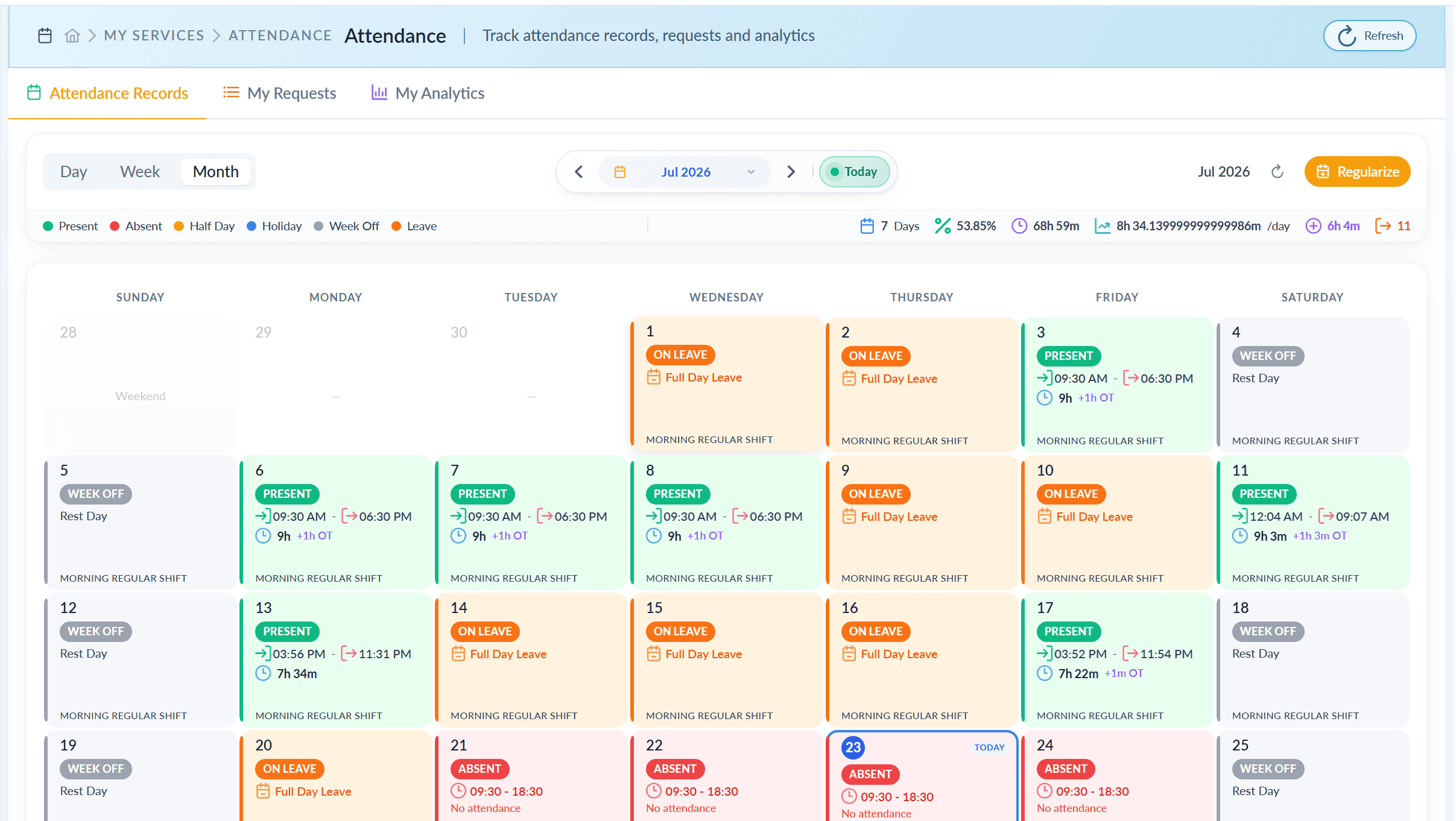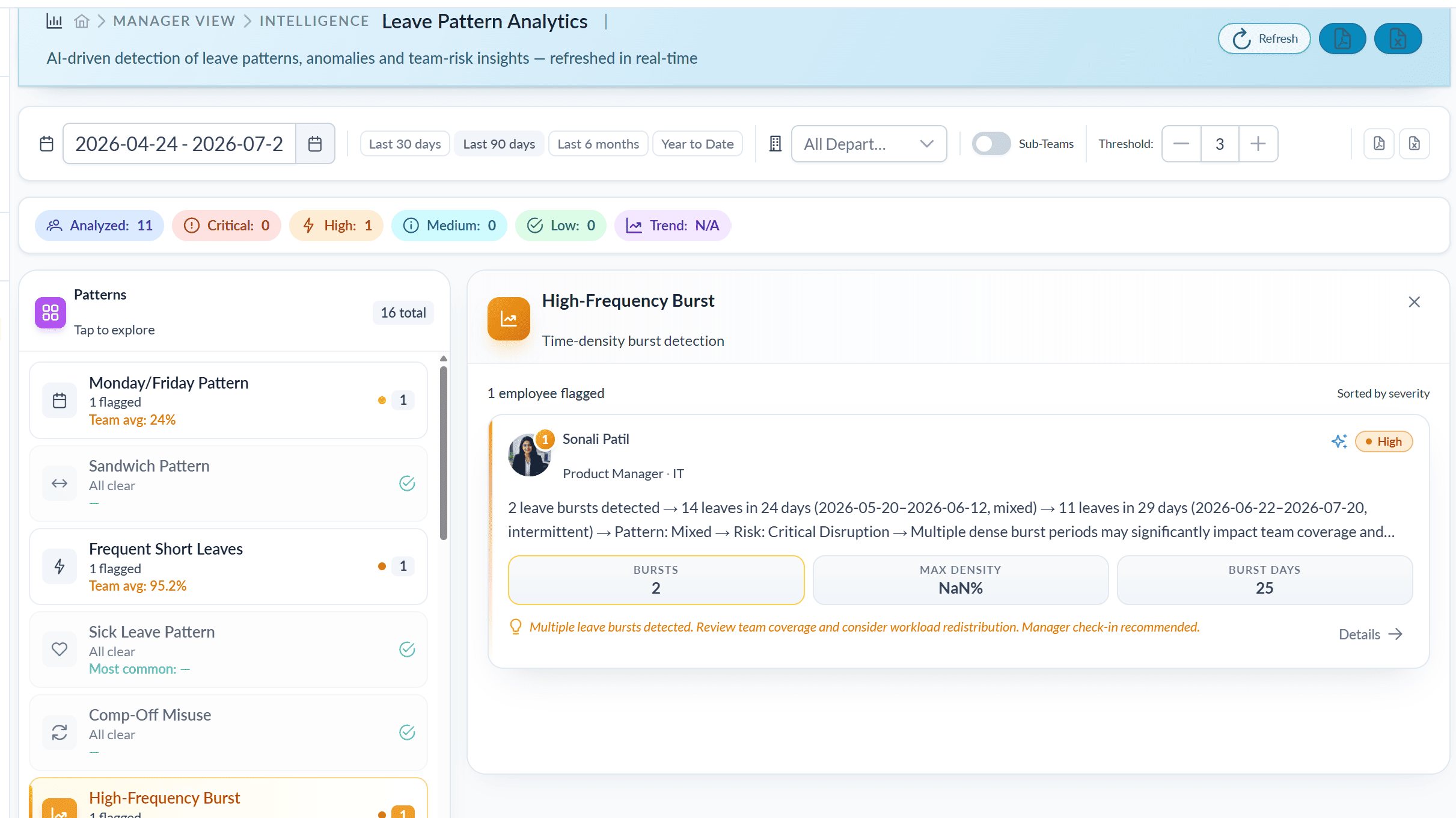
A senior engineer resigns. He claims 22 days of unused earned leave for encashment. HR records show 14. The policy PDF (last updated 3 years ago) says "as per state law" without specifying what that means. He sends a legal notice. Suddenly the conversation is no longer about 8 days - it is about an inconsistent leave policy applied to 200 other employees the same way.
The leave policy mistakes that quietly create disputes
1. Vague or undefined rules
- "Reasonable leave" with no numeric definition
- Carry-forward and encashment "as per management discretion"
- No clarity on probation-period leave entitlement
- Sandwich rule (off-days between leaves) not stated
2. Improper tracking
- Balances reconciled annually instead of per cycle
- Compensatory off granted verbally, never logged
- LOP (Loss of Pay) decided by payroll, not by leave system
- Different sources of truth for HR, payroll and the employee
3. Ignoring state-specific laws
- One leave policy applied across Karnataka, Maharashtra, Delhi, Tamil Nadu
- National & Festival Holidays Act not separately maintained
- Maternity, paternity and adoption leave entitlements not aligned to current law
- No location-aware holiday calendar
The real impact on the business
Employee dissatisfaction
Two employees, same situation, different outcome - destroys trust faster than any survey can measure.
Legal disputes
Most leave-related labour cases are won on documentation, not facts. Vague policies lose.
Payroll errors
Wrong LOP, wrong encashment, wrong F&F - every reconciliation creates a fresh dispute.
Manager friction
Each manager interprets the policy differently. HR spends hours mediating.
Why this keeps happening
- Manual processes: Policy lives in a PDF, application lives in email, balance lives in Excel.
- No rule enforcement: Anyone can apply for any leave; HR catches mistakes after the fact.
- Approval shortcuts: WhatsApp approvals that never reach the system.
- Policy drift: Exceptions become precedents, precedents become unwritten policy.
Manual vs policy-driven HRMS
| Area | Manual / PDF policy | Policy-driven HRMS |
|---|---|---|
| Rule clarity | Open to interpretation | Encoded as system rules |
| State-aware leave | One rule for all | Per-location entitlements |
| Approvals | Verbal / WhatsApp | Routed, logged, traceable |
| LOP & encashment | Calculated at payroll time | Auto-derived from leave events |
| Audit trail | Reconstructed from email | Every change logged |
A leave policy is only as strong as the system that enforces it. The PDF describes intent; the HRMS ensures behaviour. Until both match, every disputed leave is a future legal exposure.
Move from "policy on paper" to "policy in the system"
Codify each rule - accrual, carry-forward, encashment, sandwich, probation, location overrides - inside an HRMS that applies them automatically. See how Bynarize models India-grade leave policies with state and location awareness. Then read India's broader HR compliance challenges and how HRMS solves Shops & Establishment compliance.
For HR Heads and Founders: a leave dispute is rarely about leave. It is about whether your company can prove, on demand, that it treats every employee by the same documented rule. That proof either exists in your system today - or it is being written, after the fact, in a legal notice tomorrow.
Is your HR system truly compliance-ready?
Codify your leave policy. Eliminate disputes before they start.