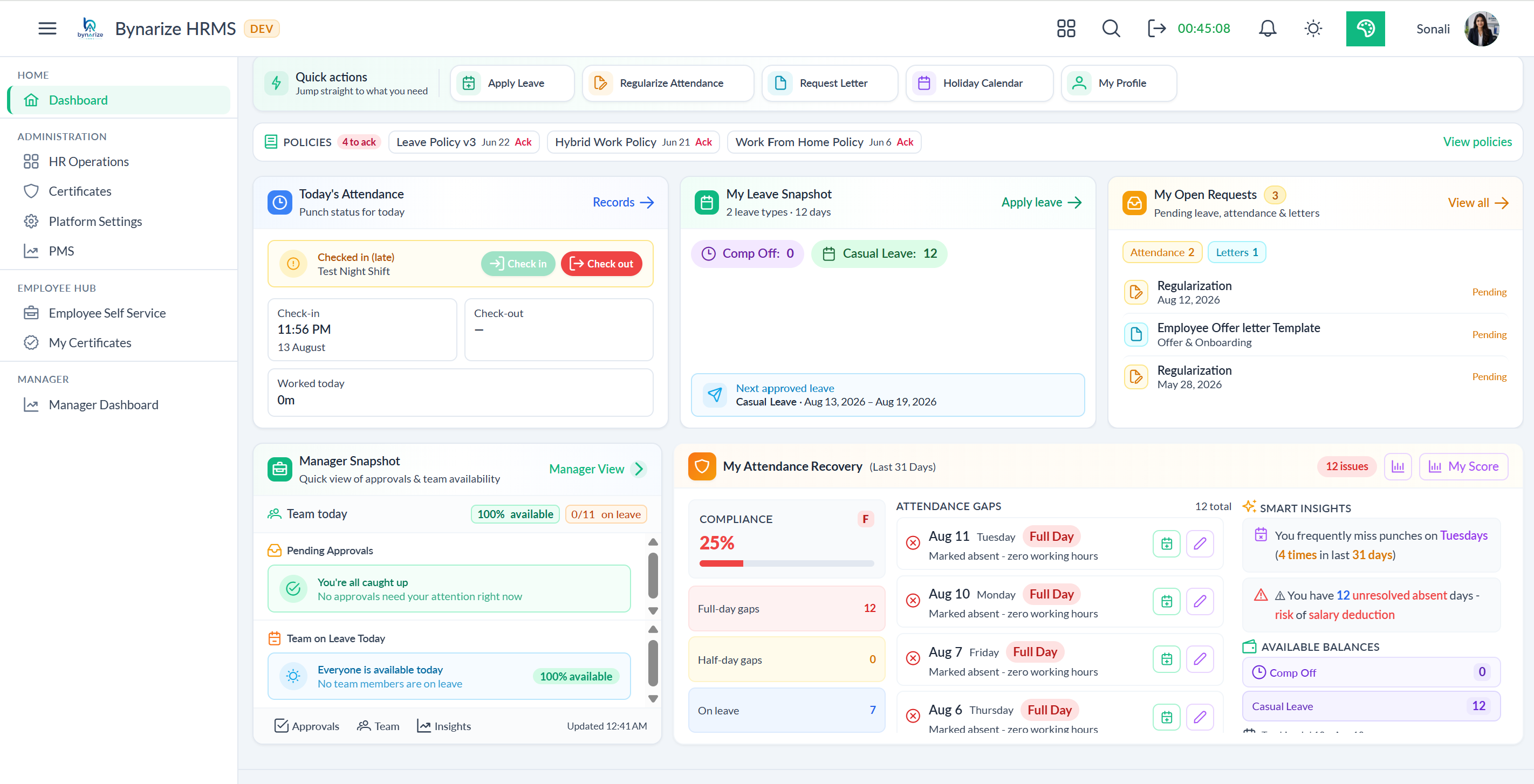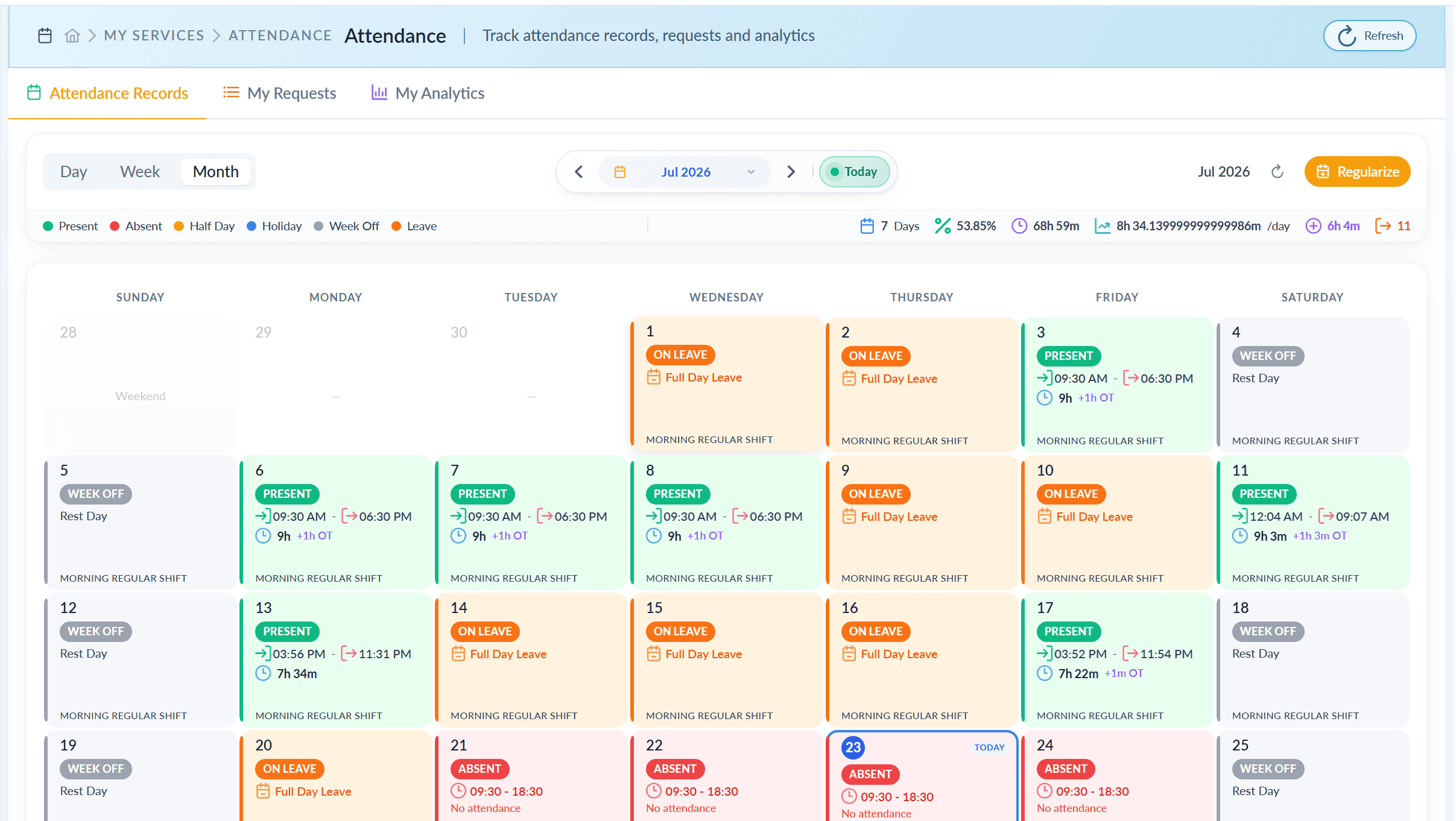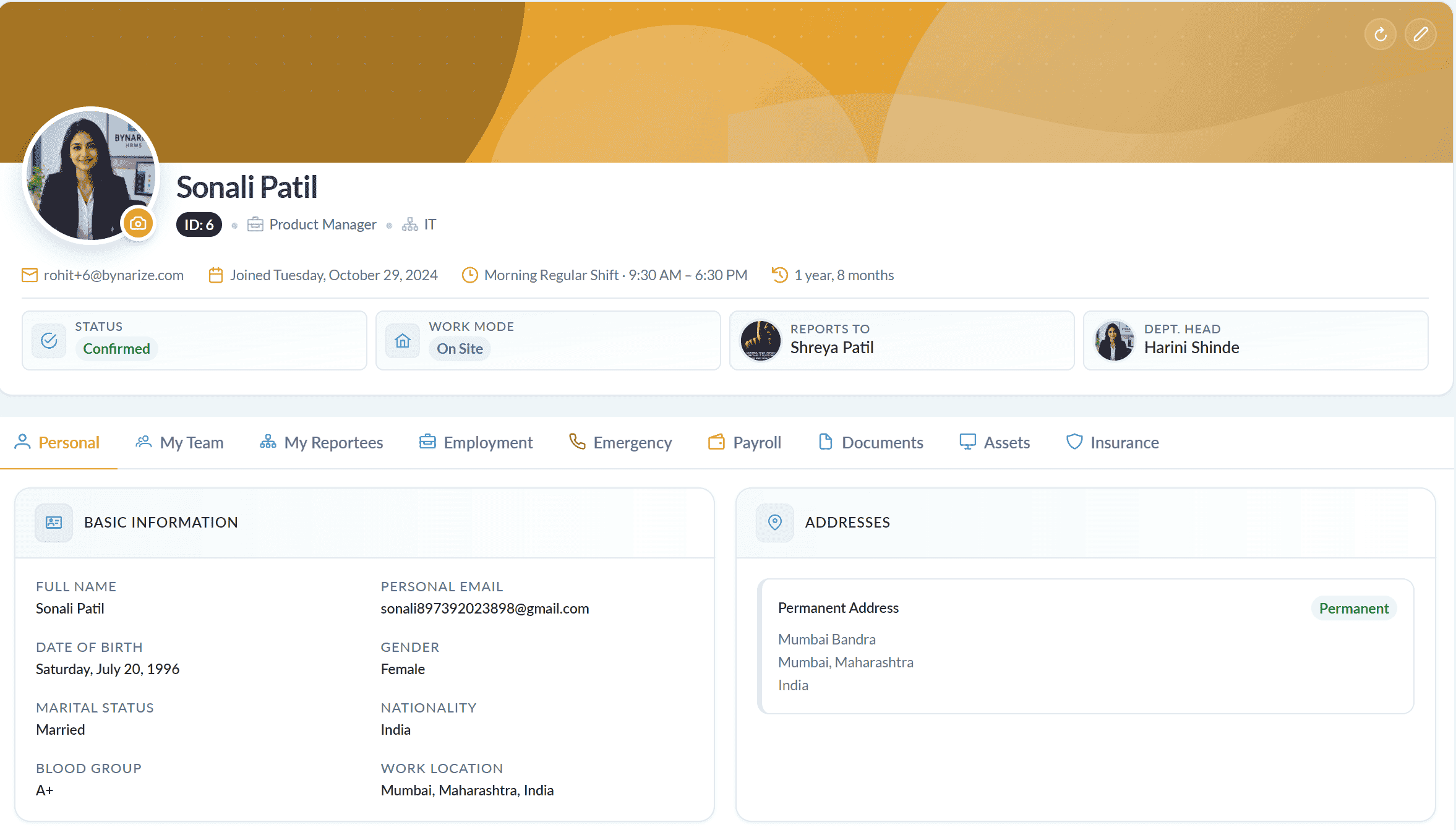
Tuesday morning. The founder is debugging an offer letter in employees_v3_FINAL_FINAL.xlsx. The ops lead is messaging someone for their leave balance. The new joiner is asking why their salary credited 4 days late. Three problems, one root cause � HR is still running on a spreadsheet built when there were 8 people.
Why Excel works in the early days
With 5�15 people, Excel is honestly the right tool. You know everyone. Leave is a Slack message. Payroll is one tab. There is nothing to automate because nothing is repeating yet.
- Zero cost, zero setup � open a sheet, start tracking.
- Total flexibility � every column is whatever you need today.
- One person can hold the whole picture in their head.
The exact moment Excel starts breaking
It is almost never a single dramatic event. It is a slow accumulation � usually somewhere between 20 and 30 employees � where these signs show up in the same month:
Hiring picked up
3+ joiners a month. Offer letters, IDs, bank details, PF � all manual.
Leave balances disputed
Two people argue about how many leaves they had left. Nobody can prove it.
Payroll errors creep in
Wrong LOP, missed reimbursement, stale CTC � at least one mistake per cycle.
"Where is the file?"
Multiple versions of the same sheet. The wrong one gets sent to the auditor.
The real cost of waiting too long
Founders delay this decision for one of two reasons � cost or change management. Both feel rational. Neither holds up against what one bad payroll cycle actually costs:
- Trust hit � early employees are your loudest advocates or critics. Salary errors damage culture fast.
- Founder time leak � every hour the founder spends in HR sheets is an hour not spent on product or revenue.
- Compliance exposure � PF, ESI, professional tax, state-wise leave � Excel has zero guardrails.
- Hiring drag � slow, manual onboarding signals an immature company to senior hires.
The right time to switch � and what to switch to
The honest answer: just before the next hiring wave, not after. If you are about to grow from 25 to 60, your HRMS should be live before joiner #26. Look for:
Pay-as-you-grow pricing
Per active employee. No setup fees you regret at 30 people.
Excel data import
Don�t start from scratch � your existing sheets should load in week one.
Built-in workflows
Leave, attendance, payroll, onboarding � not 12 separate tools.
India-ready compliance
PF, ESI, PT, state leave laws � baked in, not bolted on.
Bynarize is built exactly for this transition. See startup-friendly pricing and build a plan sized for your current headcount. For deeper context, read the hidden cost of HR in Excel and how to scale HR without growing the team.
If you are a Founder or early HR lead, the decision to leave Excel is not about software � it is about giving your company a foundation that can carry the next 12 months of hiring without constant firefighting.
Is your HR system ready to scale with your business?
Switch before the next hiring wave � not after the first payroll mistake.