A statutory audit. The auditor points at a salary record from 14 months ago and asks: "Who approved this 22% mid-cycle increment? On what basis? When was it entered into payroll?" The HR Head opens email, searches WhatsApp, calls the previous payroll lead - who has since left. Three days later, the answer is "we believe it was approved by the CEO". Believe is not a word auditors accept.
What is actually missing - even when "everything is digital"
- No record of who changed a value (only the latest value remains)
- No record of what the previous value was
- No record of why the change was made (justification)
- No record of when approval was given vs when the change happened
- No way to detect backdated entries
The risks decision-makers carry without audit trails
Compliance failure
Statutory and customer audits require demonstrable accountability - not just final numbers.
Legal exposure
In disputes (POSH, F&F, wrongful termination), the absence of a trail is treated as adverse inference.
Internal fraud risk
Without logs, salary changes, leave reversals and exit settlements can be quietly manipulated.
No accountability
Every mistake becomes "I don't know who did that" - a culture problem that traces back to a system problem.
Why audit trails matter - beyond passing audits
- Transparency: Employees, managers and leadership see the same truth.
- Traceability: Any number on payroll or any leave balance can be explained back to its source event.
- Audit readiness: External and internal audits become exports, not investigations.
- Data privacy posture: GDPR-style accountability - who accessed personal data, and when.
- Better decisions: Leaders trust dashboards because the underlying data is provably maintained.
Without audit trail vs with audit trail
| HR event | Without audit trail | With audit trail |
|---|---|---|
| Salary change | Only latest value visible | Full history with approver & reason |
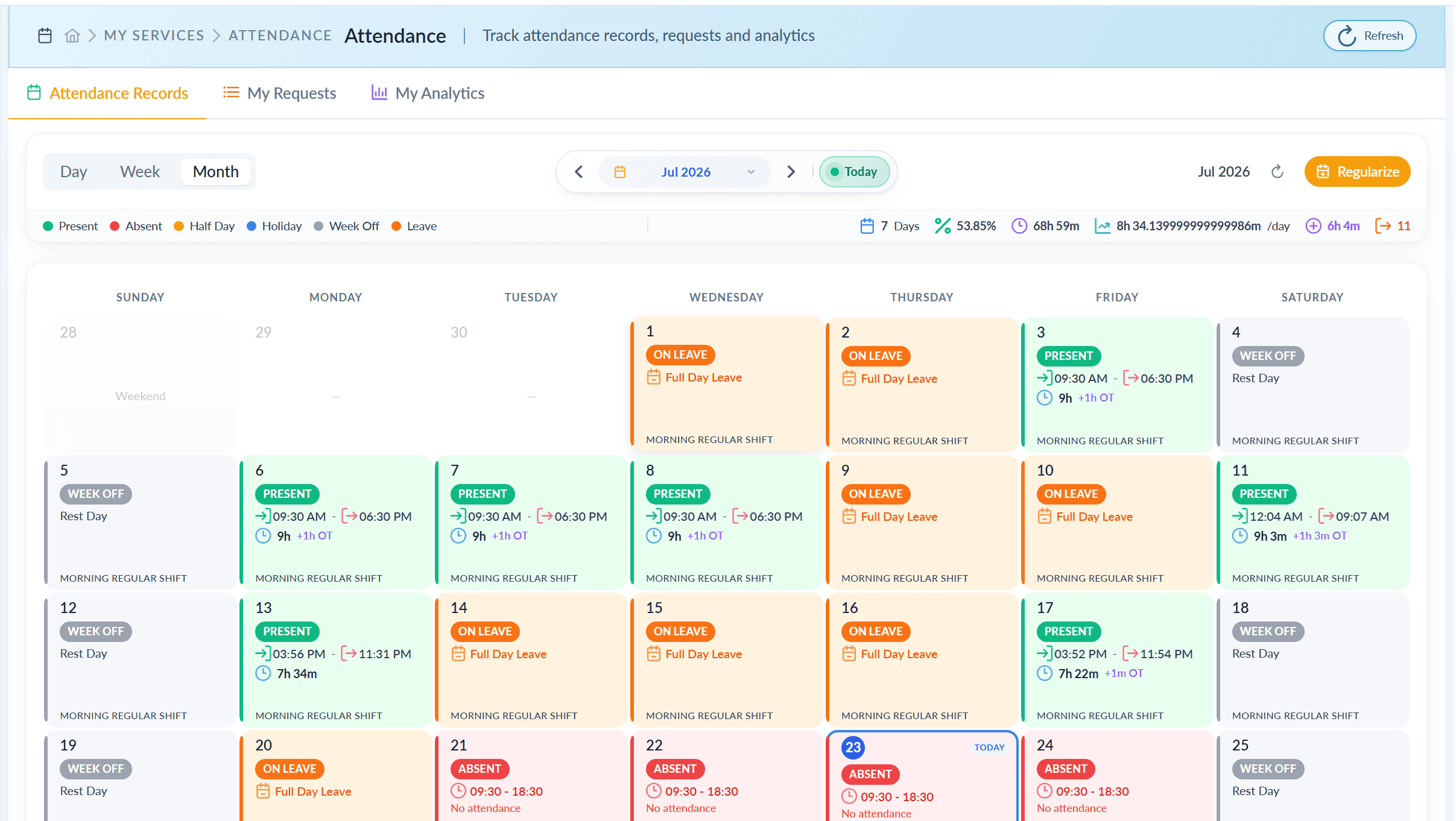
| Leave reversal | Looks like it never happened | Original entry & reversal both logged |
| Policy exception | Verbal / email-only | Tied to record with justification |
| Data access | Untracked | Who viewed which record, when |
| Audit response time | Days, with gaps | Minutes, with full evidence |
Audit trails are not a feature - they are a posture. They convert HR from a function that holds information to a function that can prove how that information came to be. That is what auditors, regulators, customers and your own board are starting to expect.
Build accountability into the system, not into people
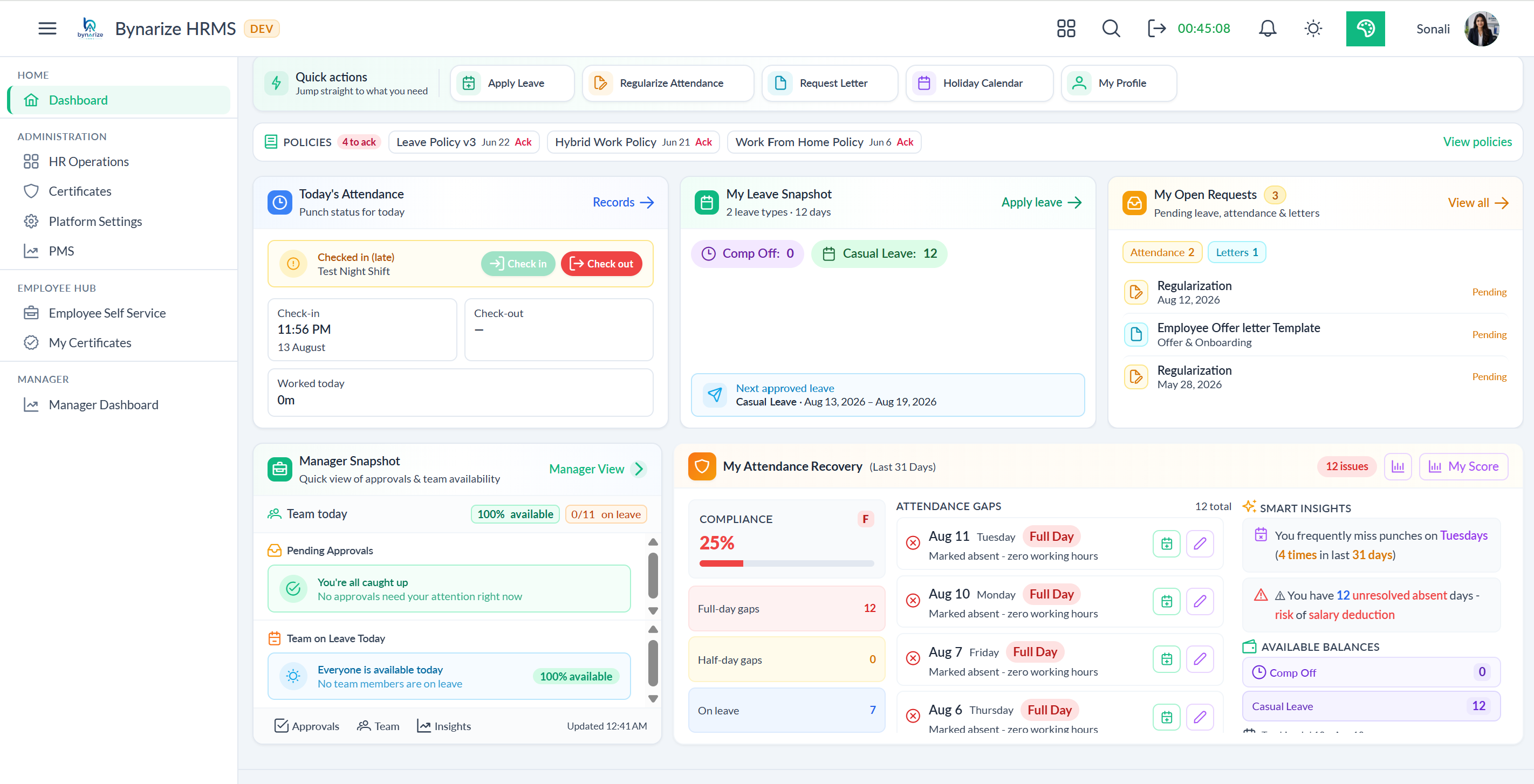
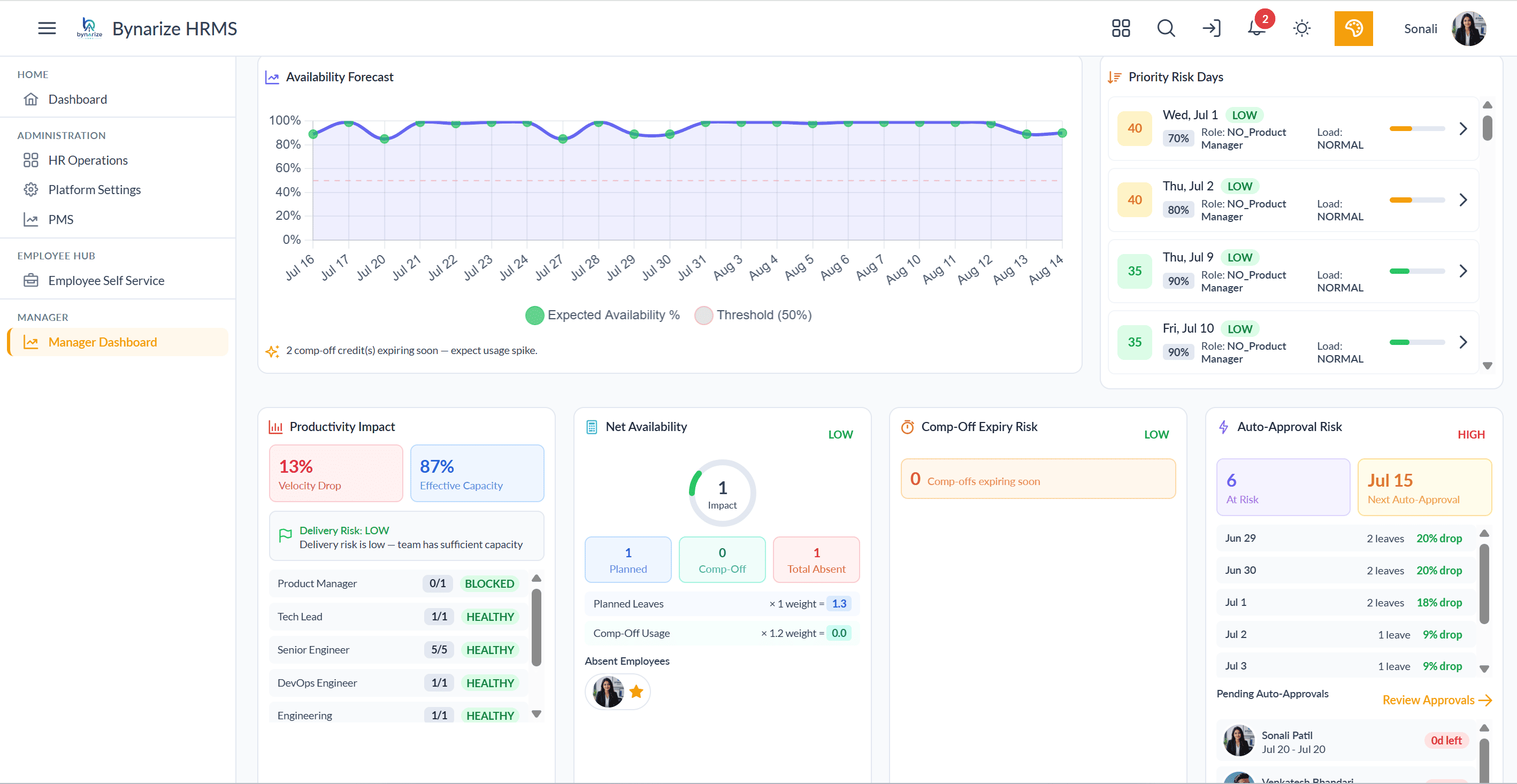
The right HRMS makes audit trails automatic - every approval, edit, access and exception is captured with no extra work for HR. See how Bynarize handles access, audit logs and data security and enforces approvals with full traceability. Pair this with India's HR compliance challenges and Shops & Establishment compliance via HRMS.
For CEOs, Founders and HR Heads: the value of an audit trail is invisible - until the day you need it. By then, it is too late to create one. Treat it as a baseline requirement of any HR system you sign off on, not a nice-to-have.
Is your HR system truly compliance-ready?
Every action logged. Every approval traceable. Every audit, calm.